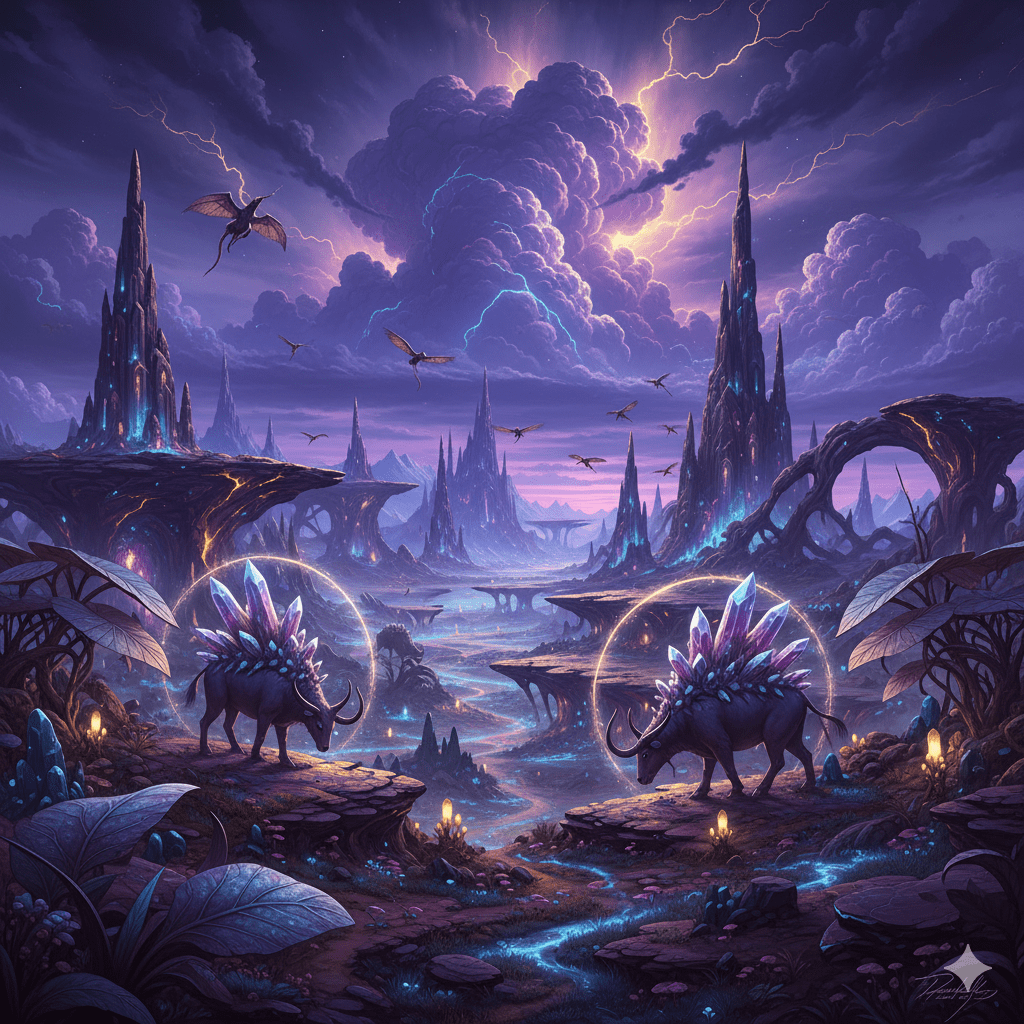
Today, January 30, is National Escape Day, which sounds at first like a novelty holiday invented by someone who wanted permission to take a long lunch and quietly disappear.
But the longer I sit with it, the more I realize this day explains everything about why I write books, build worlds, and occasionally invent entire planets just to make a point.
National Escape Day is an unofficial holiday devoted to stepping outside the grind—mentally, emotionally, creatively, or all three. It isn’t about running away in a dramatic puff of smoke. It’s about giving yourself sanctioned permission to leave the room, even if only in your head. No plane ticket required. No witness protection program needed. Just a door you decide to open.
The word escape tends to get a bad reputation, as if it automatically means denial or avoidance. But historically, escape has always been a tool for survival.
Long before anyone branded it as a holiday, humans were escaping through stories told around fires, through myths and legends, through gods, through maps of places that didn’t exist yet, and through books written in margins and under candlelight. When circumstances were unbearable, imagination didn’t weaken people. It kept them intact.
Stories were not distractions. They were rehearsal spaces for different futures.
This is where things get interesting. True escapism isn’t about pretending reality doesn’t exist. It’s about giving the nervous system, the mind, and the soul a place to breathe long enough to reorganize. When the world is loud, fast, and relentlessly transactional, imagination becomes a form of resistance. Sometimes the bravest thing you can do is say: I’m not staying here in my head today.
I didn’t start writing because I wanted to escape reality. I started writing because reality kept asking questions it didn’t want answered. So, I answered them somewhere else.
I built places where systems behave differently, where balance matters more than extraction, where attempts to control things backfire, and where beauty isn’t decorative—it’s functional. At some point, stories weren’t big enough, so worlds appeared. Then worlds weren’t enough, so planets arrived. That wasn’t avoidance. That was research.
When you create a world from scratch, you get to ask what happens if care is baked into the structure, what if harm reverses itself, what if intelligence isn’t centralized, and what if cats know more than they let on. That last one might be non-negotiable.
National Escape Day quietly honors something we don’t say out loud enough: escaping well often leads to returning changed. The places we go in imagination don’t vanish when we close the book or the notebook. They come back with us, altering how we see systems, power, bodies, nature, and possibility.
Every book I’ve written started as an exit door. Not a surrender. A strategy.
You don’t have to write a novel on National Escape Day. You don’t have to invent a planet. You can step into a story, wander into a new idea, daydream unapologetically, or let your mind go somewhere useful but unsanctioned. Sometimes the most practical thing you can do is leave long enough to imagine how things could work better.
And sometimes, if you stay gone long enough, you come back with a whole new world in your hands.
Happy National Escape Day.
I’ll be over here. Probably on another planet.
 A Heep of Words: Books by Alexandra Heep, Helena Parx, Lexa Drane
Leave a comment